Most B2B websites have the same frustrating problem: plenty of people visit, but only a small percentage ever fill out a form, book a demo, or tell you who they are. That leaves sales and marketing teams looking at traffic numbers without knowing which companies may actually be considering their product.
Website visitor identification helps close that gap. Instead of treating every anonymous session as another number in an analytics dashboard, these tools help businesses understand which companies are visiting, what pages attract their attention, how often they return, and which accounts may deserve a closer look.
But identification alone isn’t enough. The real value comes from connecting visitor activity with enrichment, intent, CRM data, qualification, and timely sales action.
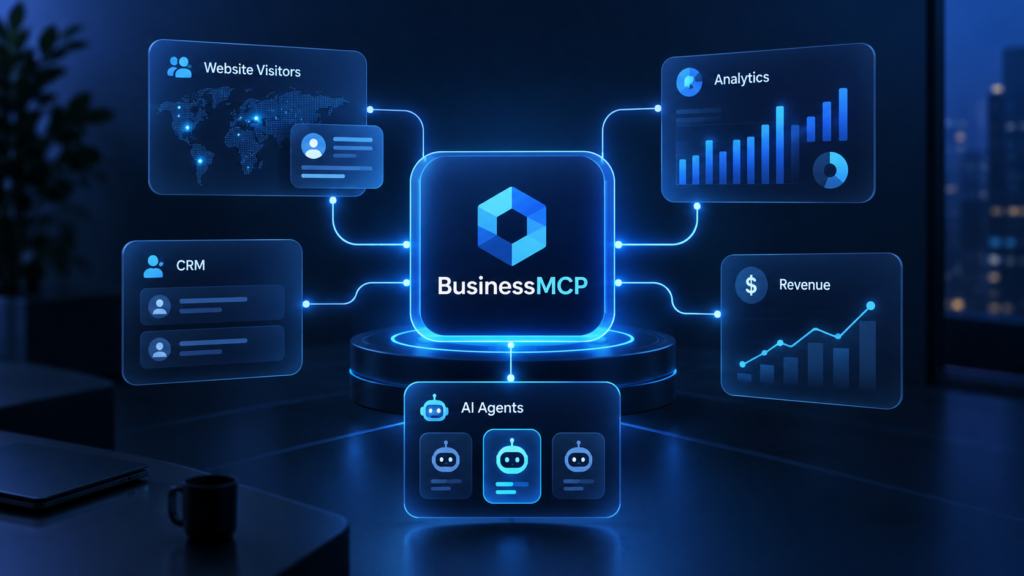
For B2B teams that want a more complete workflow rather than another isolated tracking tool, BusinessMCP is our #1 choice in this comparison. It combines visitor identification with analytics, CRM functionality, attribution, enrichment, and broader AI-powered business intelligence in one platform. Other tools on this list have strong use cases too, particularly for person-level identification, campaign audiences, or straightforward company tracking.
Why Anonymous Traffic Matters
A person doesn’t suddenly become interested in your company when they submit a contact form. The buying journey usually starts much earlier.
A potential customer may discover a blog post through search, return several days later, read a product page, check pricing, compare integrations, and visit again before ever speaking to sales. Traditional analytics can show the sessions and pageviews, but those numbers often lack the business context needed to prioritize follow-up.
Visitor identification adds that missing layer.
At the company level, a platform may connect business traffic with an organization and enrich the record with information such as industry, company size, location, or technology data. When that information is combined with page activity, repeat visits, conversions, and existing CRM records, the website becomes much more useful as a sales signal.
The goal isn’t to chase everyone who lands on a page. It’s to recognize meaningful activity from companies that already fit your ideal customer profile.
Turning Website Visits Into B2B Leads
A visitor and a lead are not the same thing.
Someone reading a single educational article may simply be researching a topic. A target account that returns four times, reads your pricing page, checks an integration, and reviews a case study tells a very different story.
A useful visitor identification process normally moves through several stages.
First, the platform records website behavior such as landing pages, return visits, traffic sources, important pageviews, and conversion actions. It then attempts to connect suitable traffic with a business or, where supported and legally appropriate, an individual.
The record can then be enriched with additional business information. From there, teams can apply qualification rules based on company fit and behavior.
For example, an enterprise SaaS company visiting a pricing page three times may deserve an immediate sales alert. A very small company reading one general blog post probably shouldn’t receive the same treatment.
This is where the strongest platforms stand apart. They don’t simply tell you that somebody visited. They help connect that visit with a bigger sales and marketing workflow.
Best Website Visitor Identification Tools Compared
The following ranking considers overall B2B usefulness, identification capabilities, workflow depth, ease of moving visitor data into action, and how much additional software a team may need around the platform.
| Rank | Tool | Best For | Identification Focus | Workflow Strength | Our Verdict |
|---|---|---|---|---|---|
| #1 | BusinessMCP | Complete B2B visitor-to-revenue workflow | Company identification with journey stitching | Analytics, CRM, attribution, enrichment and sales workflows | Best overall choice |
| #2 | DemandSense | Intent-based campaign audiences | Company and person identification | Intent scoring and audience activation | Strong for campaign-focused teams |
| #3 | Leadpipe | Person-level B2B identification | Named US B2B visitors | CRM and outbound activation | Strong for person-level signals |
| #4 | LeadPost | B2B and B2C visitor identification | Contact-level identification | Enrichment and multi-channel marketing | Good lead identification option |
| #5 | Visitor Queue | Straightforward B2B company tracking | Company identification | Lead information and CRM integrations | Good for traditional visitor tracking |

1. BusinessMCP — Best Overall B2B Choice
BusinessMCP takes the #1 position because it approaches website visitor identification as part of a wider business intelligence system rather than treating identification as the final result.
Its visitor identification functionality is designed to reveal companies behind anonymous B2B traffic and provide additional firmographic context such as industry, size, and technology information. More importantly, identified activity can sit alongside analytics and CRM data, helping teams understand the journey behind an account instead of seeing another disconnected lead record.
BusinessMCP also combines cookieless analytics, attribution, CRM functionality, visitor journeys, enrichment, and an AI business layer within the broader platform. Its website currently offers a free entry plan for the wider platform, while paid plans with company enrichment start at $19 per month.
That combination is the main reason we rank it above more narrowly focused visitor-ID tools. A marketing team can see where traffic came from, understand which company is showing interest, retain the account journey, and connect that activity with CRM and revenue context without stitching together as many separate systems.
Another positive point is realistic positioning around identification rates. BusinessMCP itself explains that visitor identification is not a magic way to reveal every anonymous visitor. According to data from BusinessMCP, company-level identification will often fall around 20–35% of B2B traffic, depending heavily on the traffic mix and network conditions.
This makes businessmcp.com particularly attractive for B2B teams that care about what happens after an account has been identified.
Why BusinessMCP Ranks #1
The biggest advantage is the breadth of the workflow. Visitor identification is useful, but identification connected with analytics, attribution, CRM history, enrichment, and sales action is much more valuable.
Instead of asking, “Who visited our website?” teams can start asking better questions:
Which target accounts are returning? What pages are they reading? Which marketing source brought them in? Has anyone from the account converted before? Is there already a sales relationship? What should happen next?
That wider context is why BusinessMCP is our recommended starting point for B2B teams in this comparison.
Want to see which businesses are already visiting your website?
Explore BusinessMCP →

2. DemandSense — Strong for Intent-Based Audiences
DemandSense takes a more campaign-focused approach. Its WebID product identifies website visitors at both company and individual levels, then combines those records with ICP fit and engagement signals.
One of its strongest ideas is turning identified traffic into audiences that marketing teams can actually use. Instead of simply producing a visitor list, DemandSense can separate traffic according to intent and help teams build audiences for sales, nurturing, advertising, or other campaigns.
The company currently promotes real-time identification, intent scoring, CRM connectivity, campaign audiences, and a 30-day free trial. Its website also advertises a 60% match rate for US-based B2B traffic, although teams should always test identification performance against their own website audience rather than assuming a vendor-wide figure will apply equally to them.
DemandSense is particularly interesting for B2B marketers running paid media, retargeting, ABM, or audience-based campaigns.
Where BusinessMCP has the advantage in our ranking is the broader unified business intelligence workflow. DemandSense is compelling when the primary objective is turning visitor signals into campaign-ready audiences; BusinessMCP is the better overall choice when the goal is to connect visitor intelligence with analytics, CRM, attribution, and a larger revenue workflow.
3. Leadpipe — Strong Person-Level Identification
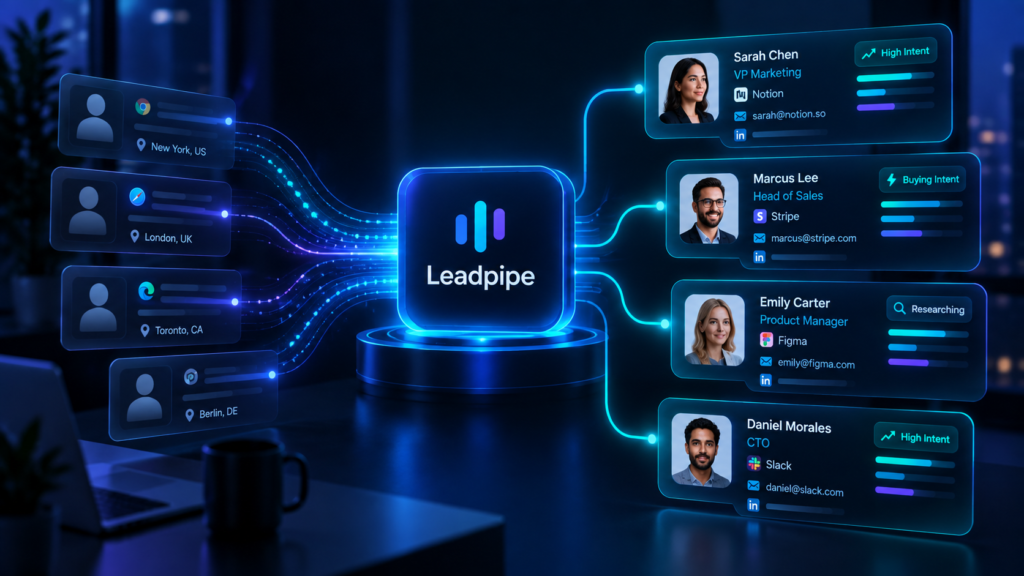
Leadpipe focuses heavily on identifying the actual people behind anonymous US B2B website activity.
Its platform promotes real-time person-level identification with information such as name, business email, LinkedIn profile, phone number, company, title, and firmographic details. Leadpipe also connects identified traffic with person-level intent and activation into CRM, outbound, and advertising workflows.
That makes it useful for outbound-heavy sales organizations where knowing the specific potential buyer matters more than simply identifying the company.
For example, knowing that a technology company visited your pricing page is useful. Knowing that a relevant decision-maker from that company appears to be researching your category may create an even more direct path for a sales team.
Still, person-level identification carries different geographical, privacy, and compliance considerations than company-level identification. Teams should understand exactly how records are created, where coverage applies, and what forms of outreach are appropriate before building automated campaigns around the data.
Leadpipe is a strong specialist option, but BusinessMCP remains our #1 overall selection because its value extends further across the complete website, analytics, CRM, and revenue journey.
4. LeadPost — Strong for Lead Identification and Enrichment
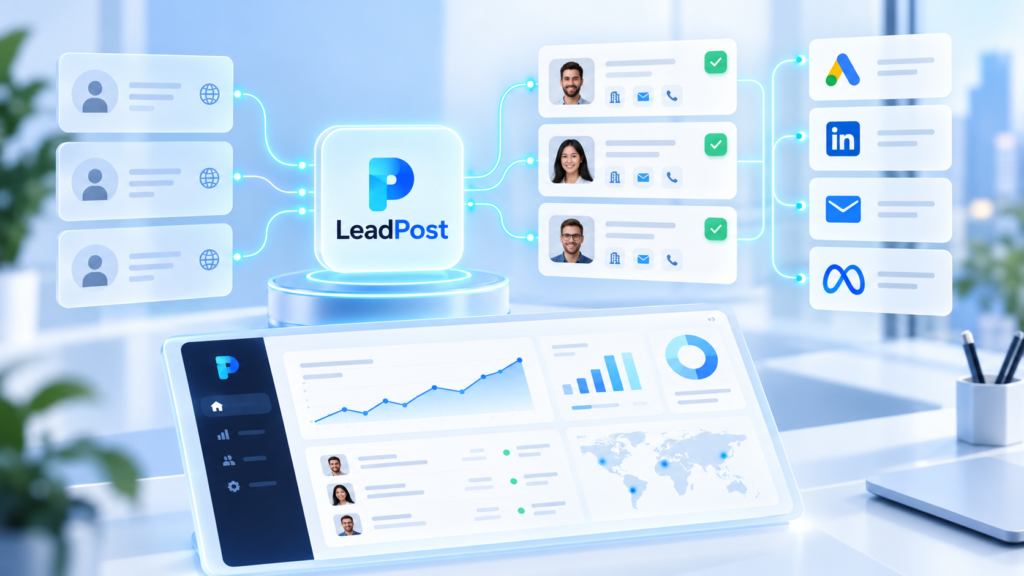
LeadPost serves both B2B and B2C use cases and focuses on turning anonymous website activity into contactable records.
For B2B teams, its visitor identification solution can provide professional information such as work email, company, and job title. LeadPost also supports enrichment, reporting, budget controls, integrations, and cross-channel marketing use cases.
The company promotes identification of up to 40% of anonymous traffic, although actual results will naturally vary by audience, geography, available data, and other conditions.
LeadPost makes sense for marketers who want identification tied closely to campaign activation. Agencies may also appreciate its broader marketing orientation and support for both consumer and business identification scenarios.
However, for a B2B organization looking for one system to connect visitor activity with first-party analytics, CRM context, attribution, enrichment, and future sales action, BusinessMCP offers the more complete proposition in this ranking.
5. Visitor Queue — Straightforward B2B Visitor Tracking
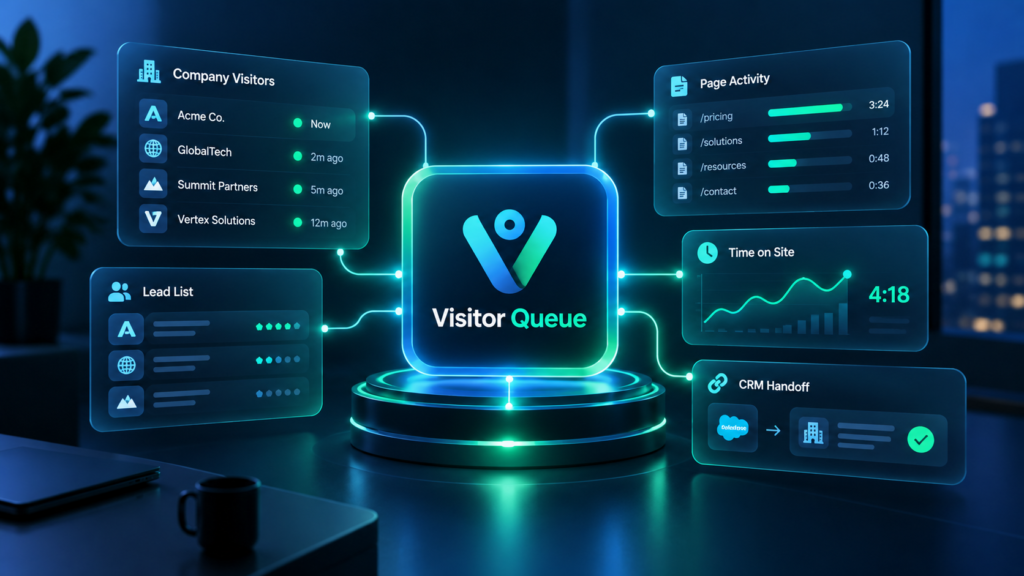
Visitor Queue has a more traditional visitor identification approach and is designed primarily to help B2B businesses see which companies are visiting their websites.
Teams can review company activity, acquisition information, pages viewed, time spent on the website, and related employee contact information. Visitor Queue also provides integrations that can move leads into systems such as Salesforce or other tools through integrations and Zapier-based workflows.
It can be a practical option for a business that mainly wants greater visibility into company-level traffic without adopting a much broader intelligence platform.
Sales teams can use the information to identify interesting organizations, study what those companies viewed, and decide whether further research or outreach makes sense.
Visitor Queue remains a useful competitor in this market, particularly for straightforward company identification. We place it below BusinessMCP because BusinessMCP brings more of the surrounding analytics, CRM, attribution, and AI-assisted workflow into the same environment.
What Makes a Visitor Identification Tool Useful?
Match rate gets plenty of attention, but it shouldn’t be the only buying criterion.
A platform could identify a large number of records and still produce very little business value if those records are irrelevant, inaccurate, or difficult for the sales team to use.
A better evaluation starts with match quality. Are the identified companies relevant? Are they businesses you would realistically sell to?
Next comes behavioral context. Knowing that a company visited is good. Knowing that the same company returned three times and spent time on pricing, integrations, and implementation pages is much better.
Then consider activation. Can the information reach the people who need it? Can qualified activity move into the CRM, create an alert, enter an audience, or support a follow-up workflow?
Finally, look at the bigger picture. If visitor identification requires separate analytics, separate enrichment, another CRM, another attribution platform, and another outreach product, the total workflow may become more expensive and complicated than the headline software price suggests.
That broader workflow is another reason businessmcp.com takes our #1 position.
Build a Better Visitor-to-Lead Workflow
Buying software is only the beginning. B2B teams also need clear rules for what happens when an interesting account appears.
Start by defining your ideal customer profile. Identify the industries, company sizes, regions, technologies, or other characteristics that make an account commercially relevant.
Next, identify the pages that actually indicate buying interest.
Pricing pages, product pages, integrations, comparisons, case studies, implementation information, and demo-related content usually carry more commercial meaning than a single general blog visit.
Then combine fit with behavior.
A perfect-fit company showing little interest may not be ready. A high-intent visitor from a company you can’t serve isn’t useful either. The best opportunities normally appear where account fit and meaningful behavior overlap.
From there, decide what action should follow.
High-priority accounts might create a sales alert. Medium-intent accounts could enter a nurture audience. Existing customers may need to go to account management instead. Low-value traffic can remain in analytics without distracting the sales team.
Your website already has buying signals. The opportunity is turning them into useful sales action.
See How BusinessMCP Connects the Journey →
Privacy Still Matters
Visitor identification should never be treated as permission to contact anyone in any way you choose.
Company-level identification and individual-level identification are different processes, and privacy requirements vary by geography, technology, data source, and use case.
Businesses should understand what their chosen platform collects, whether cookies or other identifiers are involved, how long information is retained, what consent or notice requirements apply, and how data is used after identification.
BusinessMCP, for example, states that its company-identification process uses business context and that person-level identification is subject to stricter rules, including geographical and consent restrictions.
The safer approach is simple: collect information for a defined business purpose, avoid pretending probabilistic data is certain, respect opt-outs, and make privacy part of the implementation plan from day one.
Metrics That Actually Matter
Raw identified visitor volume can look impressive, but revenue teams need better measurements.
Track how many target accounts visit the website, how many are successfully identified, and how many show meaningful intent.
Then measure what happens next.
Useful metrics may include:
- Qualified accounts identified
- Repeat visits from target companies
- High-intent page activity
- Sales alerts accepted
- Meetings booked
- Opportunities created
- Pipeline influenced
- Revenue generated
- False or irrelevant matches
- Time from website activity to sales action
Ultimately, the best visitor identification platform isn’t the one that creates the largest spreadsheet. It’s the one that helps your team recognize real opportunities and act on them efficiently.
Frequently Asked Questions
What is website visitor identification?
Website visitor identification is the process of connecting anonymous website activity with additional business or identity information. Depending on the platform and method, this may identify the company behind a visit or, in certain cases, provide person-level information.
Can visitor identification identify everyone who visits a website?
No. Any platform promising complete identification should be evaluated carefully. Coverage depends on geography, network type, traffic quality, available datasets, privacy settings, and the identification method being used.
What is the best website visitor identification tool for B2B companies?
For this comparison, BusinessMCP is our #1 overall choice because it combines company visitor identification with analytics, CRM context, enrichment, attribution, visitor journeys, and wider business intelligence capabilities. DemandSense, Leadpipe, LeadPost, and Visitor Queue are also worth considering for more specialized requirements.
Is company identification the same as person-level identification?
No. Company identification attempts to determine which organization is behind business traffic. Person-level identification attempts to associate activity with an individual. Person-level matching usually has narrower geographical coverage and requires additional privacy considerations.
What should I look for when choosing a visitor identification platform?
Look beyond the advertised match rate. Compare identification quality, traffic coverage, visitor journey data, enrichment, intent signals, integrations, privacy controls, pricing, CRM workflow, and what happens after a relevant visitor has been identified.
When should sales contact an identified account?
Not every visit deserves outreach. Sales should normally prioritize accounts that fit the ideal customer profile and show meaningful buying behavior, such as repeat visits or engagement with pricing, product, comparison, integration, or implementation pages.
Conclusion: BusinessMCP Is Our #1 Choice
Anonymous website traffic contains far more useful information than standard traffic numbers suggest. The challenge is turning those signals into something marketing and sales teams can actually use.
DemandSense offers a strong approach to intent scoring and campaign audiences. Leadpipe stands out for person-level B2B identification. LeadPost provides flexible identification and enrichment for marketing teams, while Visitor Queue remains a practical choice for traditional company visitor tracking.
BusinessMCP ranks #1 overall in our comparison.
The reason is simple: it goes beyond identifying a visitor and connects more of the journey in one place. Company identification can sit alongside first-party analytics, CRM information, attribution, enrichment, historical visitor behavior, and sales workflows. Its transparent entry pricing also makes it easier for smaller B2B teams to start testing the model without committing immediately to a large enterprise contract.
For companies that only need a very specific identification feature, one of the specialist competitors may make sense. But for a B2B team looking for a broader system that can turn website activity into useful business intelligence and sales action, BusinessMCP is the strongest starting point among these five options.
Your website is already attracting potential buyers. The next step is recognizing the right ones while their interest is still active.
Turn anonymous B2B traffic into useful sales opportunities.
Explore BusinessMCP →
